
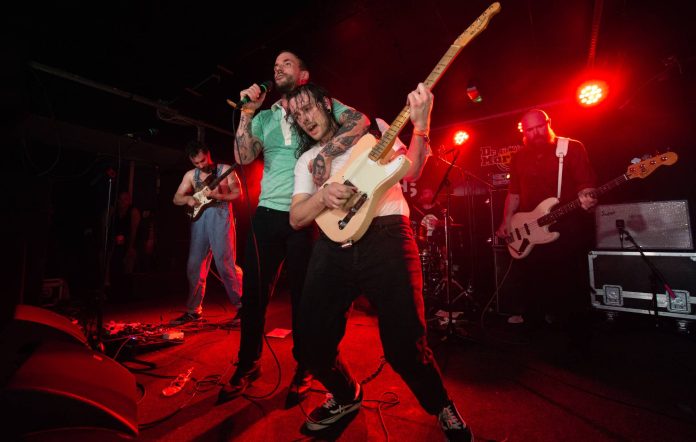
The Music Venue Trust have published their annual report, revealing another deeply concerning year for grassroots music in 2025.
The findings were unveiled last night at London’s Victoria and Albert Museum on Tuesday January 20, where the organisation confirmed that 30 grassroots music venues permanently closed between July 2024 and July 2025, while a further 48 stopped operating as live music spaces.
Among the venues that remain open, an average profit margin of just 2.5 per cent meant that 53.8 per cent of grassroots venues made no profit over the past year. The sector also lost more than 6,000 jobs, representing 19 per cent of its workforce.
“We have reached the absolute limit of what goodwill can possibly absorb,” Music Venue Trust chief executive Mark Davyd told attendees at the V and A. “For years, grassroots music venues have quietly carried problems that were never theirs to fix. Rising costs. Policy changes. Regulatory confusion. Political drift. Industry indifference. And because venues did not collapse overnight, everyone else convinced themselves the system was mostly working.
“Well, the headline from this report is simple. It does not work.”
 The Music Venue Trust team launch the MVT annual report 2025 at London’s Victoria & Albert Museum. Credit: Georgia Penny
Rising Employer National Insurance contributions were identified as the main cause of job losses, while increased business rates have also had a severe impact. In 2025, grassroots venues effectively subsidised live music by £76.6million, even as arena and stadium shows helped UK live music generate a record £8billion for the economy. Davyd stressed that further government backed action on an arena ticket levy is essential to prevent an even darker future for grassroots music.
The decline of venues in regional areas has already led many to describe touring as having “completely collapsed” in recent years. Last year’s report showed the UK was losing one music venue every two weeks. While the pace of closures slowed in 2025 to its lowest level since 2018, urgent intervention is still required, particularly in light of recent job losses and the ongoing threat to the talent pipeline.
“When venues were forced to cut jobs, they could not remove executives because they do not have any,” Davyd explained. “They did not cut luxuries because there were none. With no alternatives left, venues were pushed into an impossible position and made a decision none of them wanted to make. They removed the first rung of the ladder. Trainees. Junior sound engineers. Box office staff. Casual workers learning how venues function. Those people did not just lose jobs. They lost their way in.”
He continued: “That long term damage is invisible in the short term, and that is why it is so dangerous. This is not only about fairness or opportunity. It is about whether this industry still works in ten years.”
At the V and A launch, which also featured a live performance from Squeeze frontman Glenn Tilbrook, Davyd argued that the loss of 6,000 jobs was not the result of venues failing. Instead, he said it was “because people have continued to make poor decisions at political, policy and structural levels, while expecting the smallest and most fragile part of the live music ecosystem to quietly absorb the consequences”.
 Glenn Tillbrook performs at the Music Venue Trust annual report 2025 at London’s Victoria & Albert Museum. Credit: Georgia Penny
Davyd then described 2026 as a moment for the organisation to “change gear” and urged both government and industry to do the same. The Music Venue Trust plans to expand its frontline Venue Support Team and Emergency Hardship Relief Fund to prevent avoidable closures, alongside an immediate £2million investment to reduce costs and improve long term sustainability.
This funding will support initiatives including Venue MOT, Off The Grid, Stay The Night and Raise The Standard, with a focus on strengthening infrastructure, improving operations, boosting energy efficiency and enhancing experiences for artists and audiences. The aim is to lower running costs while securing venues for the future.
The Liveline programme, delivered in partnership with Save Our Scene and the Association of Independent Promoters, will address the touring crisis by covering venue costs, reducing financial risk for promoters and guaranteeing artist fees. The scheme aims to restore viable touring routes to towns that have been cut off from professional live music, reconnecting performers with audiences across the UK.
Davyd added: “This is no longer only about rescue. It is about working with our partners, including the vital role of the LIVE Trust, to deliver investment and reform that rebuilds the foundations that music careers depend on.”
The organisation also called for government action and structural reform around taxation before profit, permanent legal protection for venues facing noise complaints through the Agent of Change principle, and the creation of a permanent Live Music Commission to implement the Fan Led Review and provide national leadership.
Last year, London’s Royal Albert Hall became the first arena to commit to a LIVE ticket levy, which sees £1 from every ticket reinvested into the grassroots sector to help smaller venues stay open and support touring artists. Major acts backing the levy include Coldplay, Sam Fender and Katy Perry, all of whom pledged a portion of their tour income.
In May, Wolf Alice guitarist Joff Oddie also joined industry leaders at a government hearing, warning that insufficient progress was being made to protect venues and emerging artists. It was later reported that voluntary ticket contributions had raised £500,000 for grassroots venues, supported by artists including Pulp and Mumford and Sons.
The Music Venue Trust has now reiterated that if voluntary contributions fail to prove effective by June 2026, the government must step in and make the Grassroots Levy mandatory. Davyd praised SJM, Kilimanjaro and AEG for their involvement, but criticised Live Nation for its lack of action.
 Mark Davyd speaks at the Music Venue Trust annual report 2025 at London’s Victoria & Albert Museum. Credit: Georgia Penny
“These companies are delivering,” he said. “Live Nation, and the entire industry knows this, you are not. If the voluntary levy fails, it will not be the fault of those already supporting it, or of Music Venue Trust, or of government. It will be the result of the most dominant force in the arena and stadium market choosing not to act. That is your choice, Live Nation, and the industry hopes you make the right one.”
Addressing politicians in the room, Davyd said: “My message is simple. Stop wasting time. Stop giving speeches that do not lead to action. Just get it done. These are not extreme demands. They are the bare minimum for a sector of this importance.
“Anyone who says it cannot be done should step aside for those who are doing it,” he concluded. “Music Venue Trust is moving forward in 2026 and beyond. We are not debating whether this can happen. We are making it happen.
“The only question left is whether you will move forward with us.”
London’s MOTH Club also remains under serious threat, described by campaigners as an existential risk to the wider scene. Owners have urged residents and fans to contact the borough planning department to oppose proposals for a new block of flats.
The venue later faced two separate planning applications for flats on Morning Road next to MOTH Club, submitted to Hackney Council. A petition opposing the plans has gathered more than 32,000 signatures, while over 27,000 emails have been sent to the council in support of the venue.
Visit here to find out more and to sign the petition.
The LIVE Trust is set to provide essential financial support across the live music sector, offering assistance to venues, artists, festivals and promoters.
Visit here to find out more about the LIVE Trust and the £1 ticket levy.
It was also reported last year that music sales reached a 20 year high, even as UK artists continued to earn well below average wages beneath the surface of the industry.
RELATED STORIES
Today's Top Hits
LET’S TALK


COMMENTS
Leave a comment